
Choosing a skip comes down to two things: how much you’re throwing away, and how heavy it is. Get both right and you won’t pay for space you don’t use, or end up needing a second skip.
Start with bin bags
The easiest way to picture a skip is in black bin bags. Have a rough guess at how many bags your rubbish would fill, then match it to a size.
| Skip | Bin bags (approx.) | Weight limit | Good for |
|---|---|---|---|
| 2 yard | 22–24 | 2 tonnes | Small projects, light garden or building work. |
| 4 yard | 35–38 | 4 tonnes | Kitchen or bathroom refits, small extensions, garden work. |
| 6 yard | 55–57 | 8 tonnes | Heavier building work, soil, rubble, larger clear-outs. |
| 8 yard | 70 | 8 tonnes | Bigger building projects, extensions, major clear-outs. |
Then think about weight
Soil, rubble, bricks and concrete are heavy. A skip full of garden soil can reach its weight limit long before it looks full, so for heavy waste it’s worth going a size up on weight, not just space. The 6 and 8 yard skips both take up to 8 tonnes.
Level load only
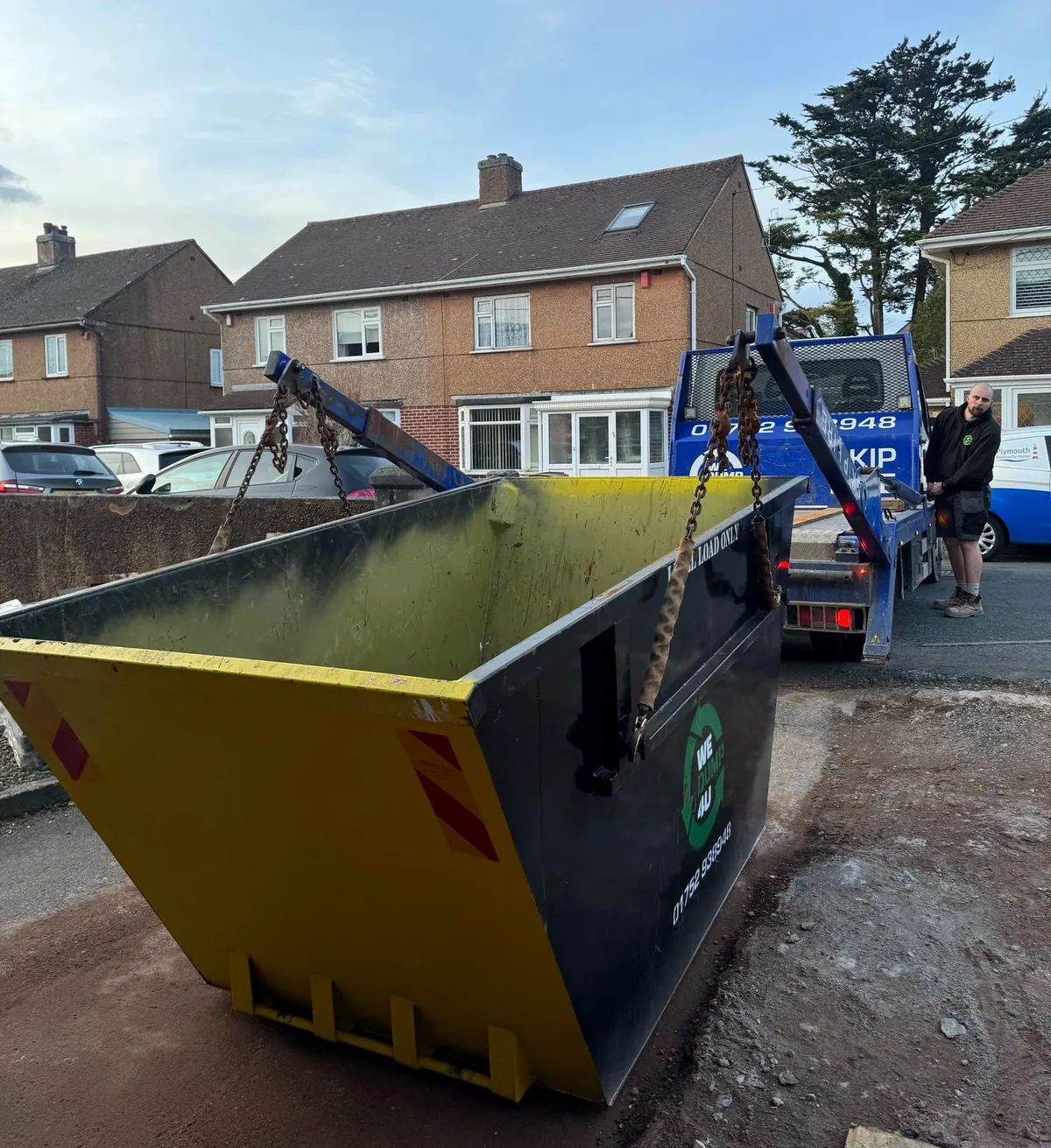
Every one of our skips says it on the side: level load only. Fill it to the top edge and no higher, so it can be lifted and driven away safely. If it’s overflowing, it can’t travel.
What can’t go in
Skips suit household clear-outs, garden waste, building rubble and general rubbish. Hazardous waste, such as asbestos and chemicals, can’t go in. If you’re unsure about something, ask before it goes in.
Still not sure?
Send us a photo of what you’re clearing on WhatsApp, or tell us about the job, and we’ll tell you which skip fits. And if you’d rather not have a skip at all, we can load it and take it away in one visit with our waste removal service.
